Our printing services use only the best available archival materials to produce prints that are suitable for sale and exhibition, or simply display in your own home. Galleries and museums around the world now accept prints made with these materials, and in some cases prints made using these processes and materials now sell for higher prices than prints made with traditional photographic fine art printing methods (e.g. silver gelatin or c-type prints).
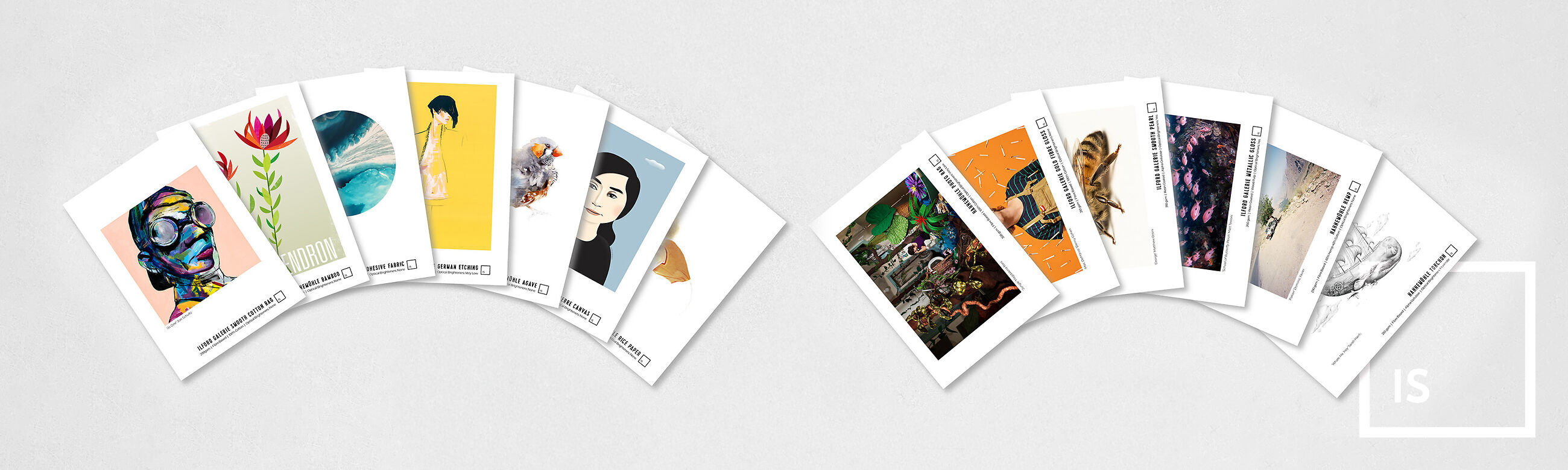
We have samples for viewing of all of these papers at our office in North Melbourne. If you're interstate or can't get into the office, we suggest sending a print job down and having a few sample A4s made on the most popular papers - so you can get an idea of just how beautiful these materials are!
N.B. Not all papers are available at all sizes - please see the chart at the bottom of this page for availability details.
Notes on printing with fine art materials from the FAQ - please read these to make sure you understand our processes and what you are ordering.
Jump to:
Epson's Ultrachrome HDR inks are pigment based and offer a very wide colour gamut, and deep velvety blacks. Independently verified longevity ratings indicate the lifespan of these inks (when used on high quality papers) meets or (in most cases) exceeds the longevity ratings of other common colour printing processes - over 100 years for colour and over 200 years for black and white prints before visible fading occurs. The testing methodology used to produce these figures is vigorous and accepted industry wide, and while no one can point to a 200 year old inkjet print just yet, the same methodologies that are used to evaluate display and storage conditions of the world's most valuable art works are now being applied to inkjet prints.
Printing with these inks allows us to make prints that are free from unwanted artifacts and flaws often found in colour processes such as bronzing and metamerism. With these inks we can achieve exceptionally high quality results on a broad range of media types, from high gloss to completely matte watercolour papers, and on materials like canvas as well. Stong blacks, rich shadow detail, and a broad, smooth colour gamut allow for prints of both tremendous subtlety and great power.
With three separate black inks, smooth and neutral black and whites are possible. On some papers, black densities now significantly exceed traditional chemistry papers, giving images of startling luminosity and depth.
Ilford's Gold Fibre Silk is one of the new generation 'baryta' papers. With a lovely smooth silk surface, this paper is very similar to traditional silk darkroom papers. Witha warm, natural tone, and luscious rich blacks, it is particualrly well suited to black and white and/or lightly toned work.
Key Features:
This new paper from Hahnemuhle is strikingly beautiful, and ecologically friendly! The world’s first digital Fine Art Inkjet paper made from bamboo fibres combines spiritual photography with environmental friendliness.
This natural art paper with its premium inkjet coating guarantees Fine Art prints with a 3-dimensional image depth and is particularly suitable for warm-toned colour and monochrome prints. Its fine soft haptic also lends a tangible fourth dimension to fine art prints.
Key Features:
In late 2007, this is the most talked about inkjet paper in the world - the closest paper yet to a true air dried fibre based appearance.
HARMAN PHOTO Professional Inkjet GLOSS FB Al Paper is a premium quality, nanoporous paper on a true photographic fibre base. It is designed to produce instant dry high quality images on a wide range of photo-dedicated inkjet printers, using dye or pigment inks.
Uniquely the paper incorporates a layer below the ink-receiving layer called Baryta. Baryta is a special coating that is traditionally applied to fibre photographic paper base prior to coating with the emulsion layers. The technical benefits of this layer include greater detail and definition, extended tonal range, and excellent archival properties. In addition Baryta coated fibre papers have a unique look and feel which have become the standard for fine art photographers worldwide over the course of more than a century.
The paper contains Alumina, which gives a high degree of optical image density and vibrancy.
Key Features:
A traditional favourite - this paper offers good d-max (black density) and colour gamut. The surface is a lovely smooth matte finish, and the weight/rigidity of the paper at 308 gsm is excellent. The surface has a very slight texture (in fine art terms it is a smooth paper) - just enough texture to give the paper itself a little life, but not enough to impair image detail in any way. Papers don't come better than this, and if you haven't tried it yet you're in for a real treat!
Made from 100% cotton rag, and designed to last several centuries, this paper has been independently tested by Wilhelm Imaging Research in combination with the Epson Ultrachrome K3 inkset and in both colour and black and white offers longevity figures (for properly cared for prints) as good as anything in the industry.
Hahnemuehle Torchon is the textured equivalent of Hahnemeuhle Photo Rag, with a classic water colour textured surface. A Torchon paper is one that is quite rigid and has an irregular texture. This paper is perfect for fine-art applications such as artwork reproduction and card making, and suits prints particularly well that rely on mood rather than fine details (think foggy morning shots, forest scenes, that sort of thing). This paper can add a real feel of hand made quality to your work (that can help drive sales!).
Museo's archival matte paper is 100% cotton rag - and a serious alternative to something like Hahnemuhle's venerable Photo Rag, the king of this market. The two papers offer print quality that is uncanninly similar - but if we had to choose, we would choose Museo. We think it is the best fine art matte rag inkjet paper in the world today.
Muso Portfolio Rag is quite smooth, and contains absolutely no optical brighteners.
Since Photo Rag first appeared years ago, many papers have tried to match it, but this is quite frankly the first serious alternative! Excellent colours and d-max bring great print quality to the table. Well worth a try!
Museo's Silver Rag is a remakable paper - the first of its kind. A 100% cotton paper that accepts the photo black ink and thus allows for incredibly rich blacks and a simply stunning tonal range. Black and white prints on this paper bear an uncanny resemblance to traditional silver gelatin prints on Agfa classic fibre based paper, while colour prints offer tremendous depth and luminosity reminiscent of dye-transfer prints.
The surface has a low level of pleasant sheen, even across both printed and non-printed areas. In the old language, it would be an n-type surface, and it really is a dead ringer for classic fibre based prints. If you're after high impact, fully archival black and white prints, this is the paper we would recommend.
Instant drying semi-gloss paper with excellent gamut and strong blacks. Excellent resistance to marking. Extremely sharp.
This paper is a much nicer alternative to papers like Ilford Smooth Pearl and Epson Premium SemiGloss. It's lower level of sheen gives it a far classier appearance and the print quality it offers is second to none in this domain - sharp, punchy, yet still capable of very sublte results. It's the perfect paper for classic portrait, wedding and album work.
It's so good we personally use it for all our day to day photo printing.
For many years we printed happily on Canson Canvas but when they changed the product to Canson Infinity Musuem Canvas, we weren't quite as happy with it, so the search was on for a better canvas.
Coincidentally around this time, Hahnemuhle launched their new inkjet canvas range - and in that range we found Hahnemuhle's Monet canvas - which in effect is an improved version of the old Canson Canvas. Visually the two are very very similar, but the new Hahnemuhle canvas is even better. The surface is again a lightly toothed surface that is distinctly canvas yet has been chosen specifically because it can hold very fine detail - second to none in fact. So the results on this canvas remain extremely photographic in quality - although the canvas is equally at home in the graphic/illustrative market, and works well for a lot of art reproduction work too.
Hahnemuhle Monet Canvas is 410 GSM and 100% cotton, and stretches very well. It is completely acid and optical brightener free, for truly archival results. You can stretch this canvas just as with normal canvas. The coating is matte, but you can varnish with classic gel mediums (or use inkjet specific archival coatings) if you desire brush stroke or smooth varnish effects. Hahnemuhle Canvas is quite robust, standing up to regular handling and cleaning.
Perhaps not quite in the same league as our other options, but capable of high quality results and useful none the less.
These prints can be fixed to just about anything, including as book covers, signs, wall coverings, furniture, you name it. All you need is a relatively flat surface, and you simply peel off the backing and stick. The print quality is very good and the prints are very durable, capabe of withstanding significant outdoor exposure. The vinyl is totally matte, so offers very low glare properties, but you can of course laminate the prints to achieve gloss should you desire it.
These prints are only available from a 24, we do not offer sheet printing on vinyl.
Polyester based clear film perfect for signage applications (e.g. decals in windows), or for use as the film for screen printing.
These prints are only available from a 24 in roll at the moment - if you need bigger let us know and we'll see what we can do.
The Epson machines can handle all sorts of media, and if you'd prefer to use a particular paper or surface of your own not listed here, this is possible. You will need to call us to discuss this (we will need to check media compatibility and make sure there is no risk to our printer), and we will produce a quote for your particular job.
We will require paper samples (a minimum of 4 A4 sheets) and 24 hours to produce an accurate profile for the paper before we can do the printing job.
Pricing from then on for prints will be 10% lower than the costs for prints on Photo Rag, as you're supplying the media, but of course most of the price mostly reflects the ink and time costs incurred in making prints.
NB the media MUST be inkjet compatible (for water based inks, NOT solvent based!) - it does not necessarily have to be a coated media, but very fibrous media can be damaging to the printer. If in doubt, show us a sample before you buy a lot of stock!